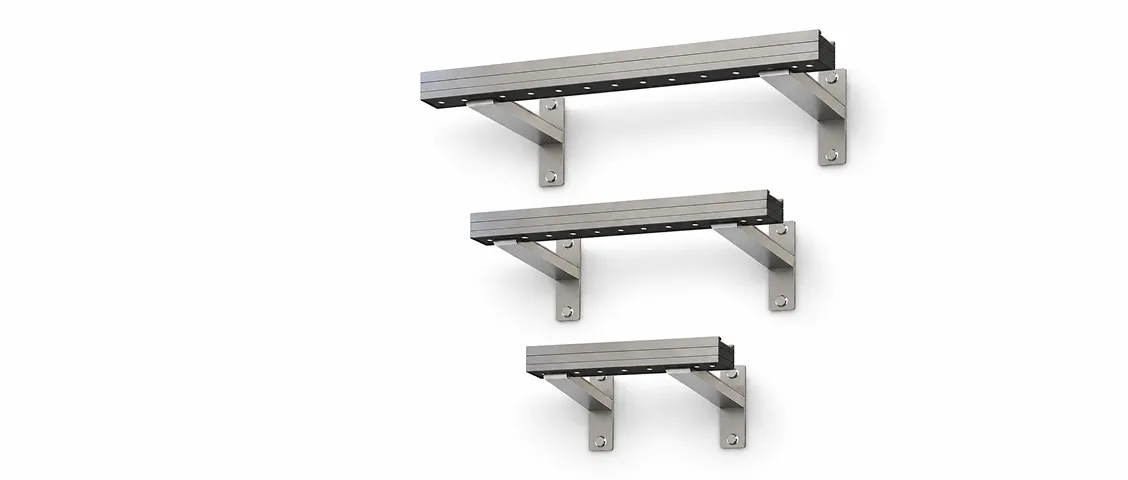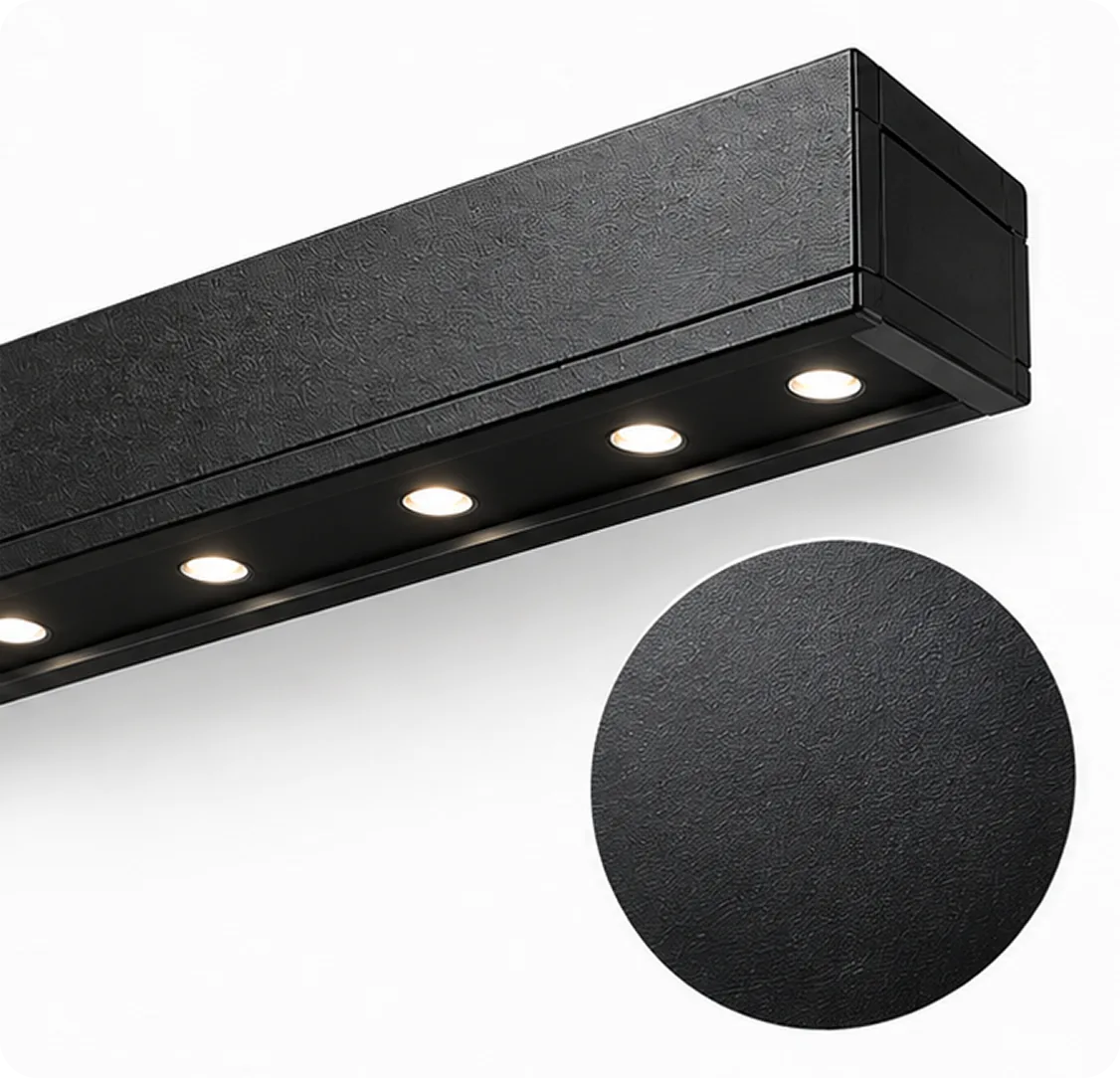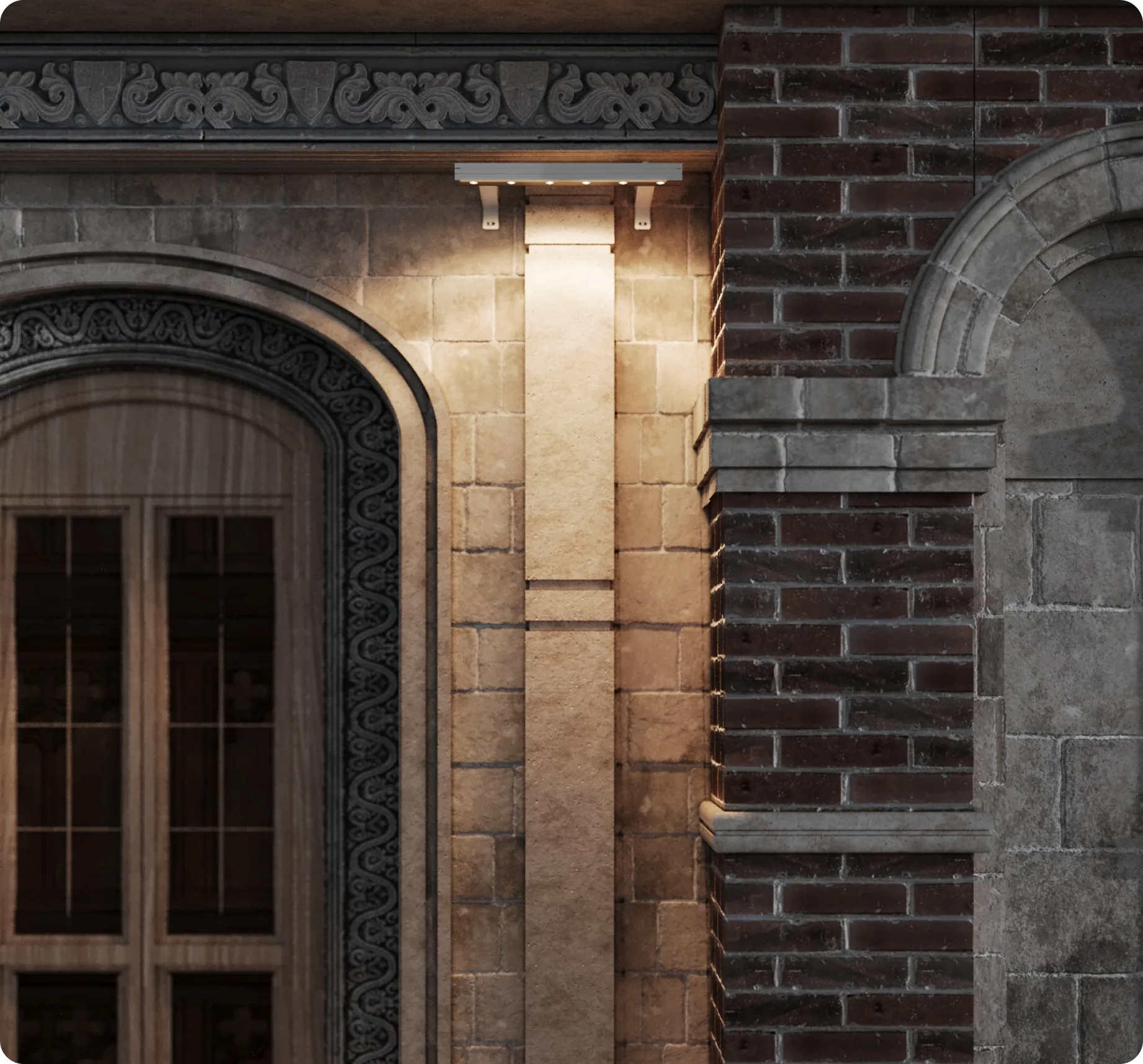
A linear fixture built to spread even, edge-to-edge illumination across a wall or façade — not a single point of light, but a continuous wash along the whole surface.
Why this collection?
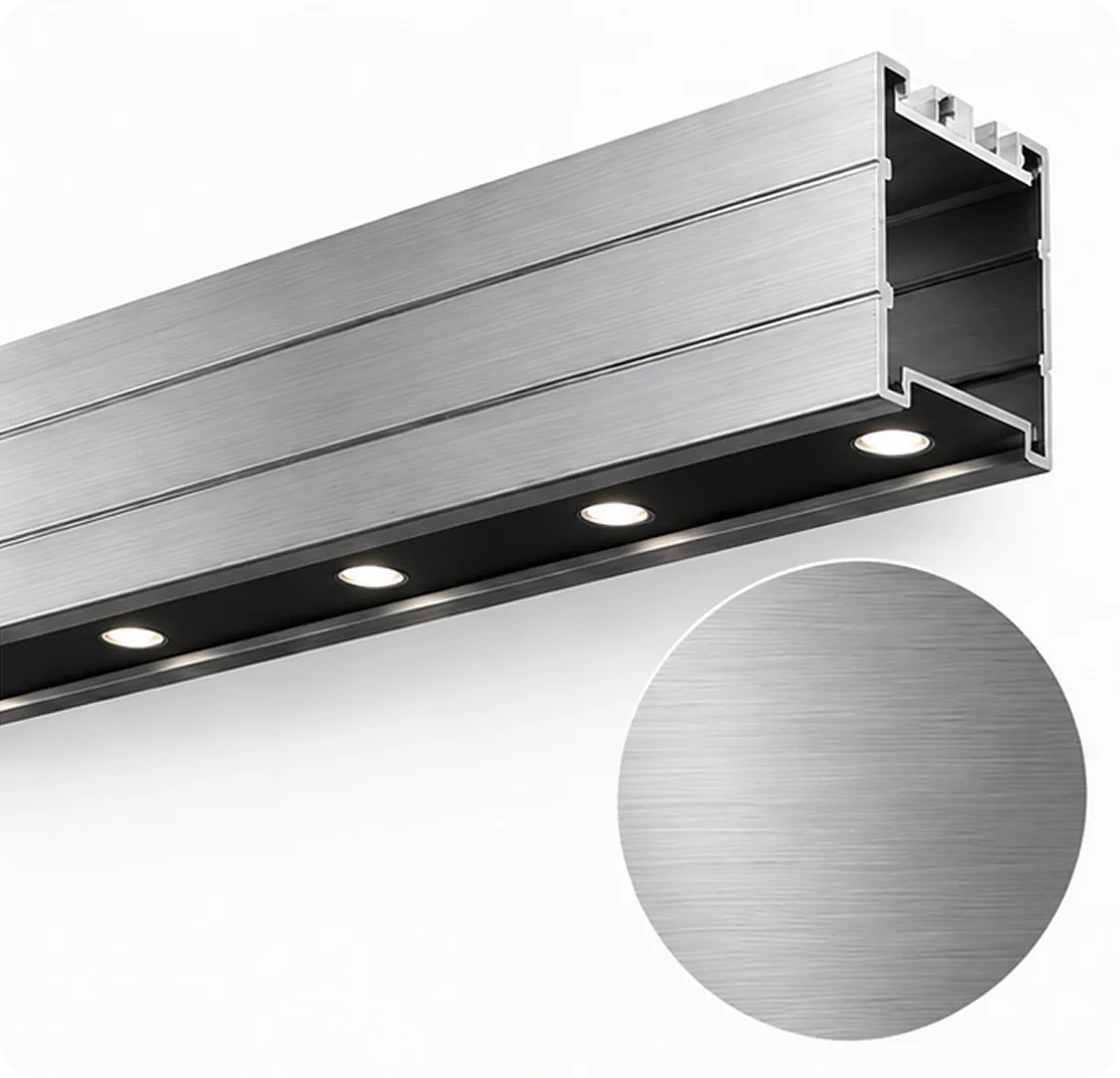
The housing material across the collection, chosen for heat dissipation and structural integrity in a long, linear form.
Used on select models for added corrosion resistance beyond natural aluminum.
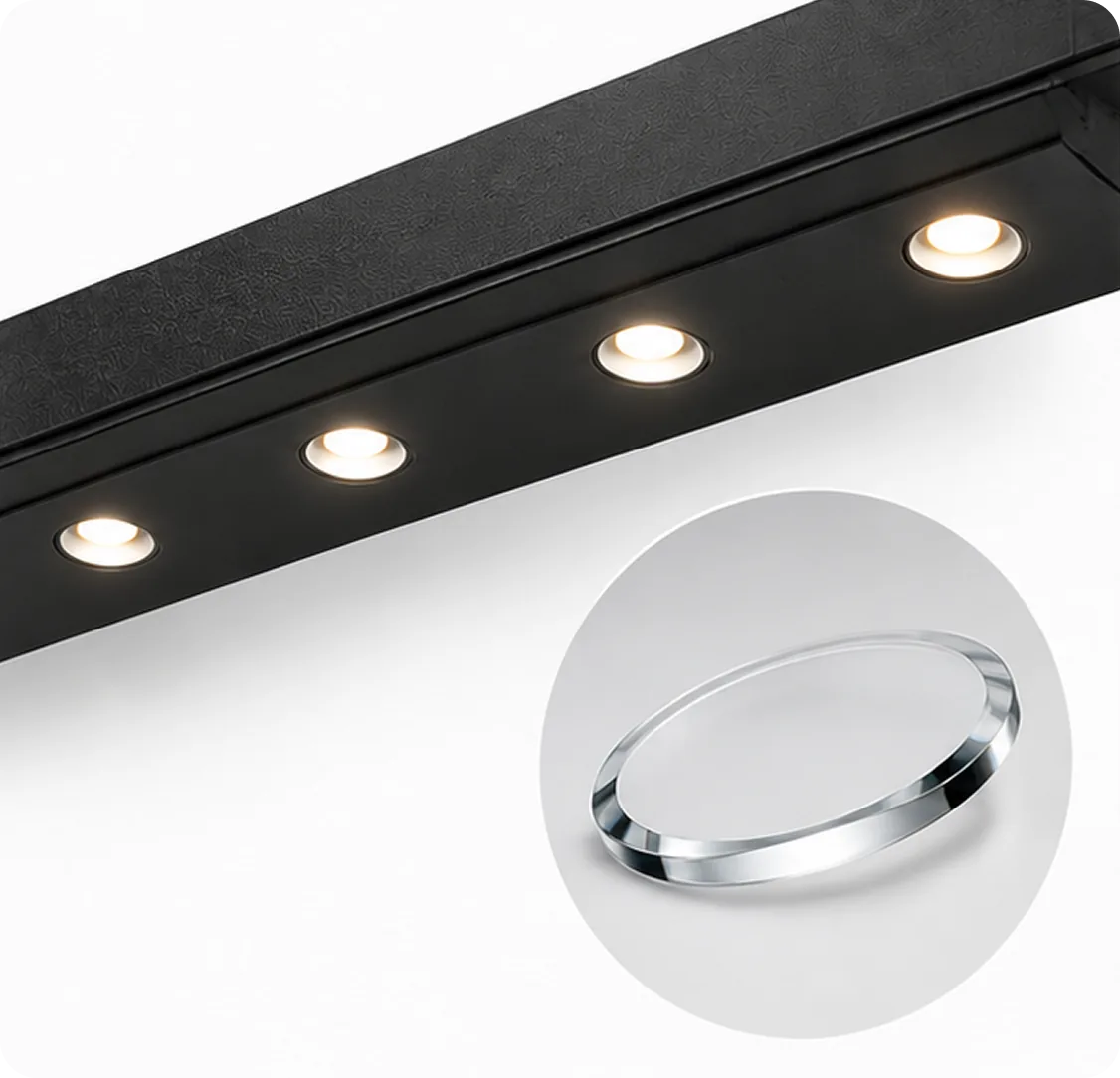
Delivers even light diffusion and holds up to impact better than a standard polymer cover.
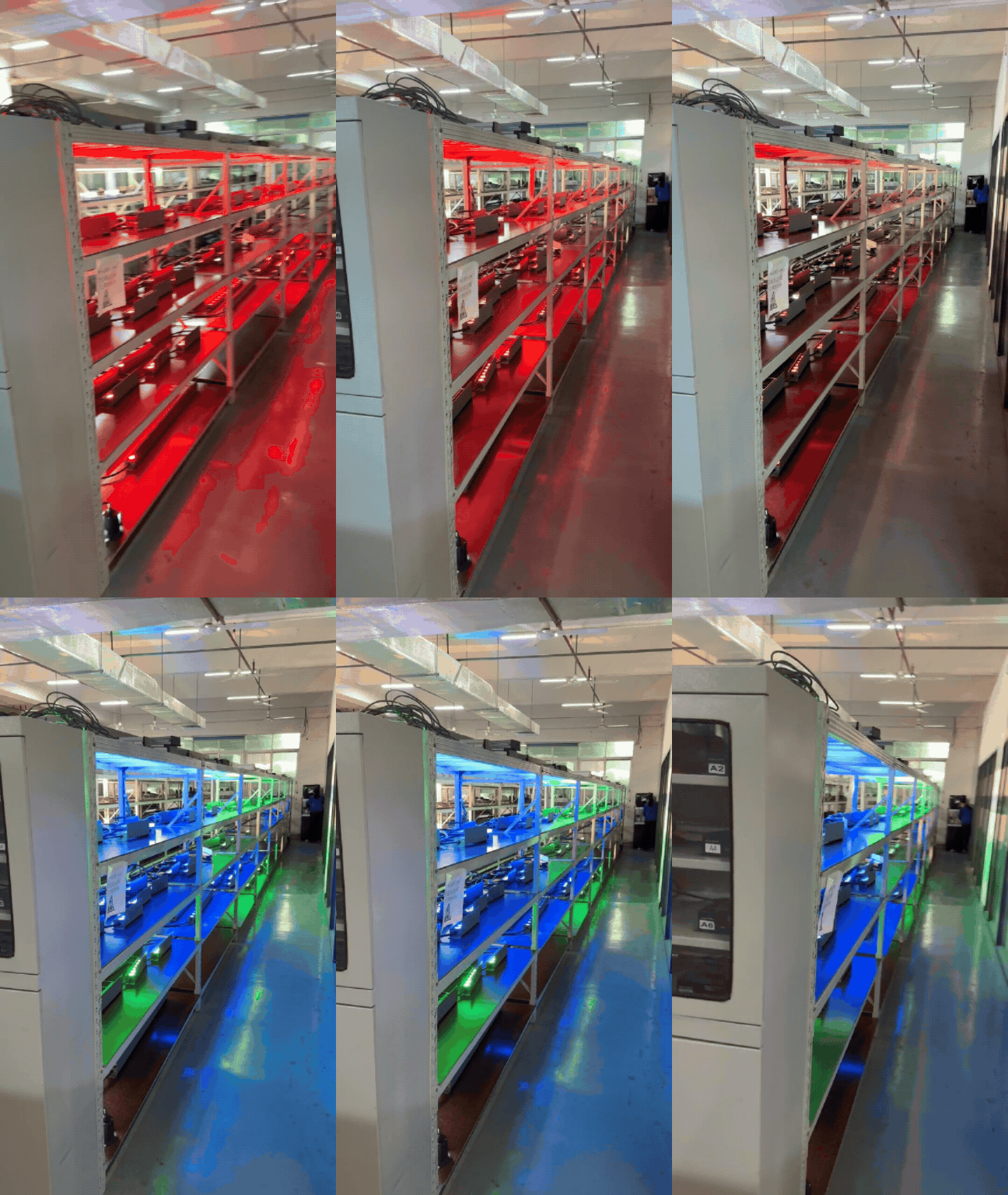
Every fixture is tested before it ships.
Materials checked before production.
Checked at each stage.
Every unit checked before shipping.
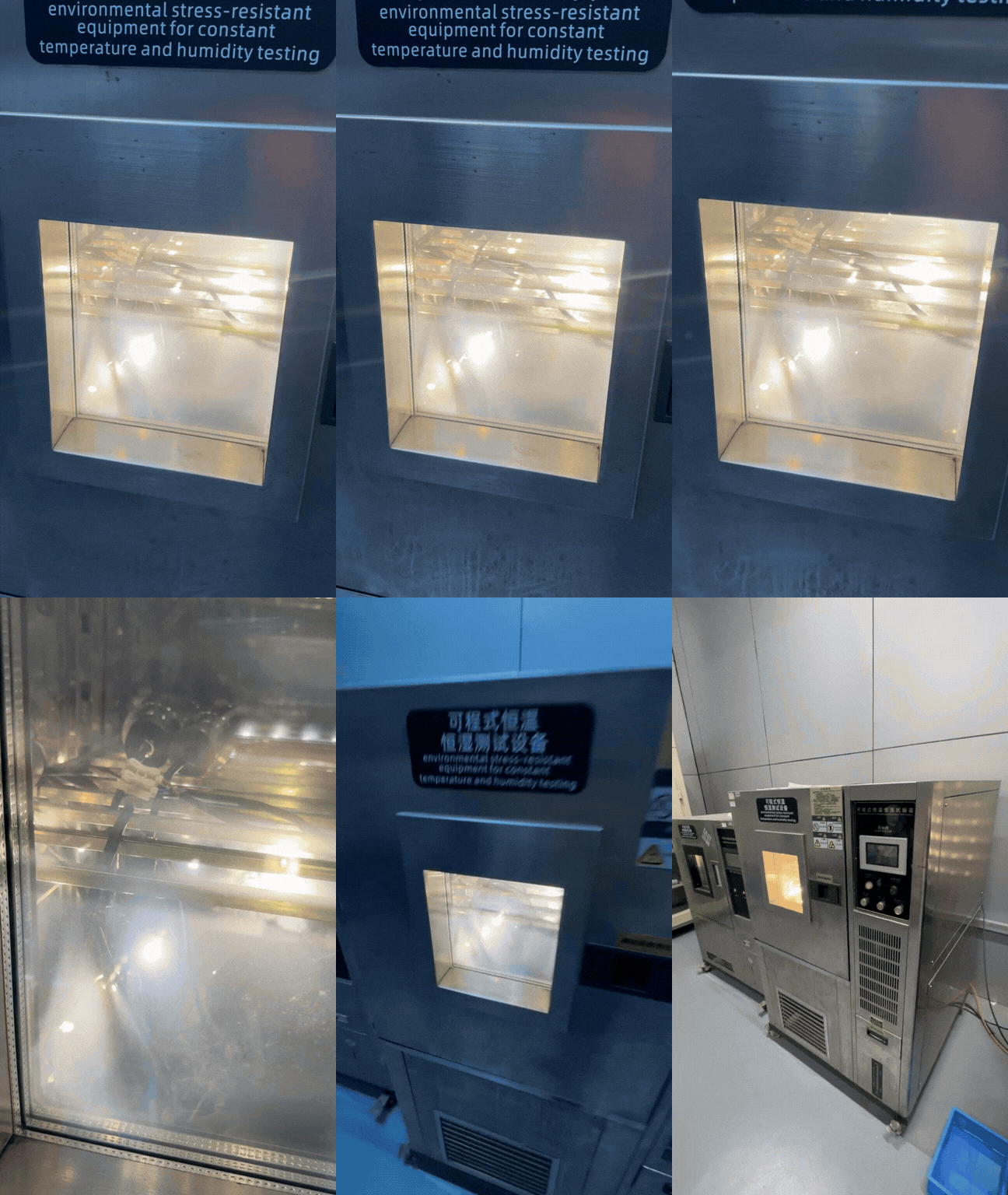
In-house lab testing
Confirms dust and water sealing.
Seals hold under rapid temperature swings.
Long-term water exposure simulation.
Beam angle and output match spec.
Verifies component strength and finish durability
Wiring and insulation meet code before shipping.
What sets us apart
Running the full process in-house — tooling, casting, machining, electronics, and finishing — rather than distributing it across outside subcontractors delivers three concrete advantages:
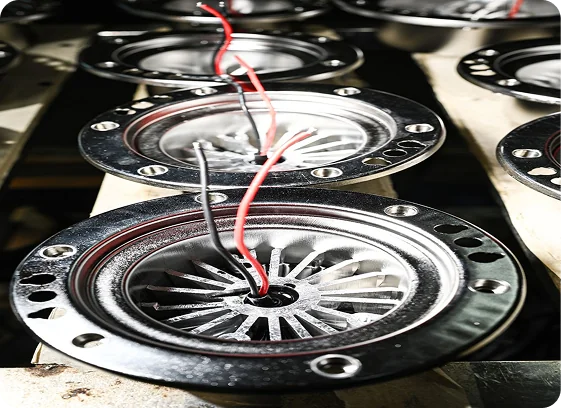
Machined flange, reamed bolt holes and a seated gasket — tolerance and finish quality visible in a single frame.
Cutting our own tooling in-house means no waiting on an outside toolmaker between order and first unit.
Hundreds of housings from one mold — dimensional repeatability is what holds a spec to the five-hundredth unit.
LED throughout
CRI 80 as standard, with CCT commonly specified at 3000K
Two lumen tiers across most models: roughly 1,600 lumens and 3,200 lumens
Wattage runs as low as 0.8W up to 1.8W depending on the model and configuration
Confirm exact figures per model on its spec sheet, since output scales with fixture length and configuration
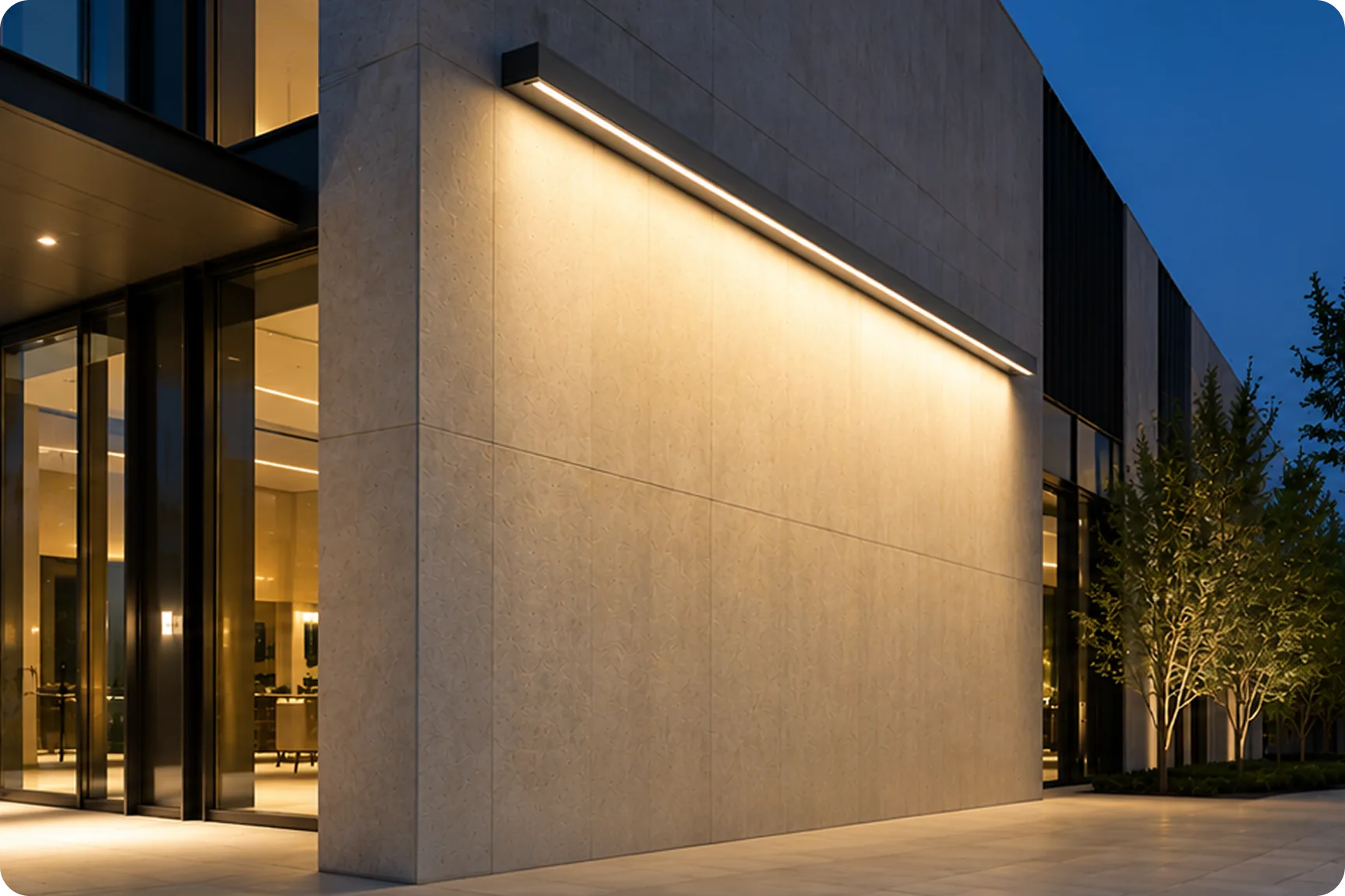
Mounted farther from the wall, producing a broad, even flood of light with minimal shadow or texture emphasis. Used when the goal is uniform illumination across the surface.
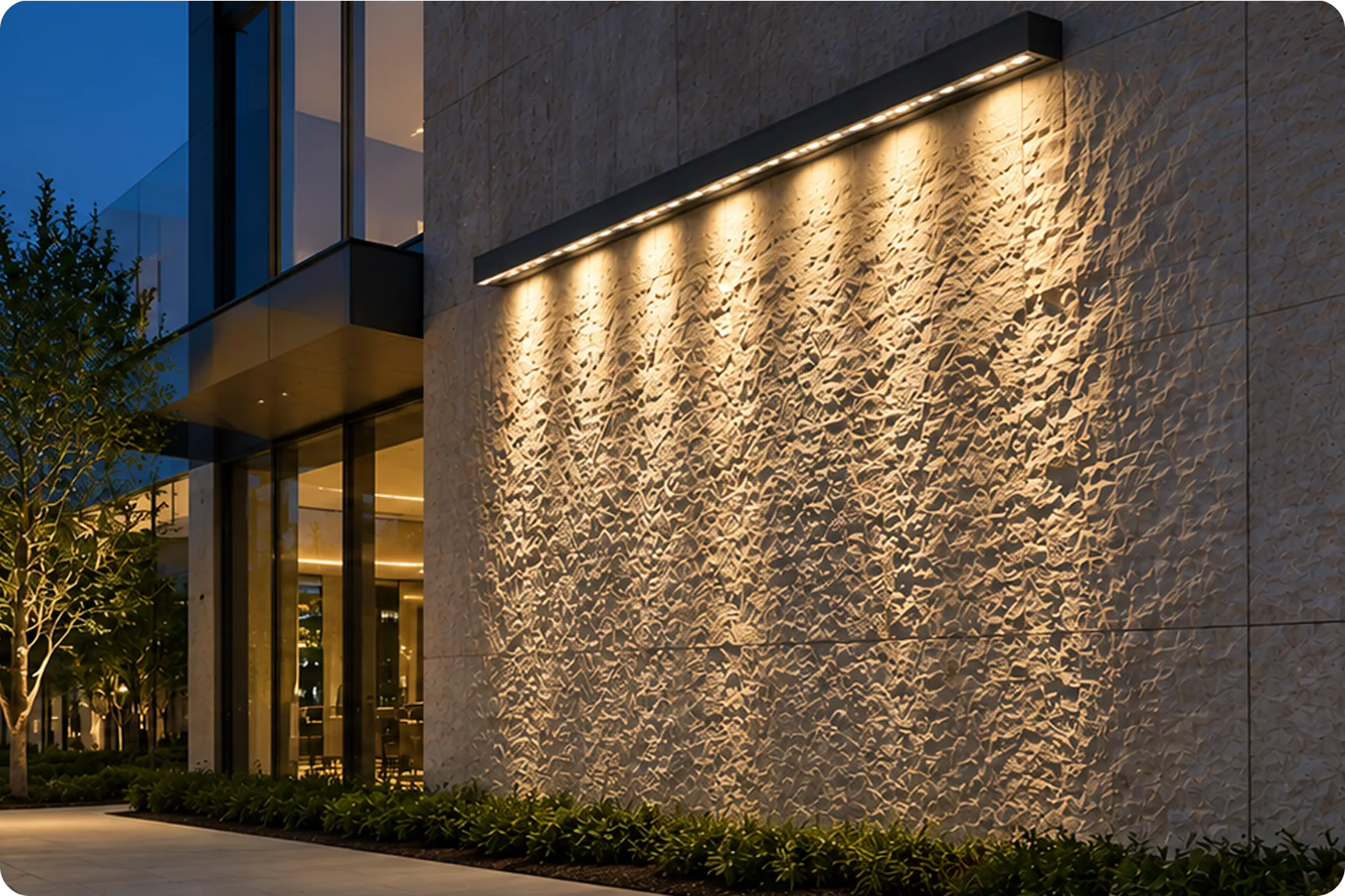
Mounted close to the wall at a sharp angle, emphasizing texture and depth by casting shadows across surface irregularities. Used when the wall’s material — brick, stone, stucco — is meant to be seen, not smoothed over.
The distinction is about mounting distance and angle relative to the wall, not a different product line — the same fixture can often serve either role depending on how it’s installed.
Simple analog dimming, compatible with most existing control systems.
Addressable control, standard for zoned commercial installations.
Flicker-free dimming, including at low output levels.
Dimming range extends down to 5% on models tested for it, for finer control at the low end of the curve.
Choose your product and specify it your way.
Our team is here to help at every stage.