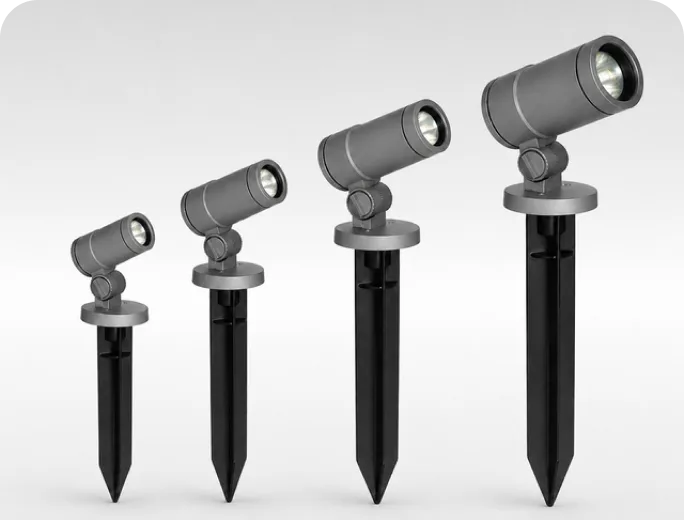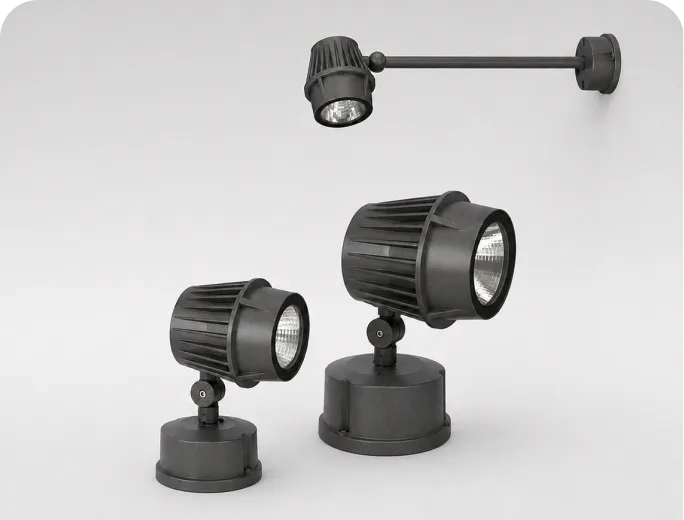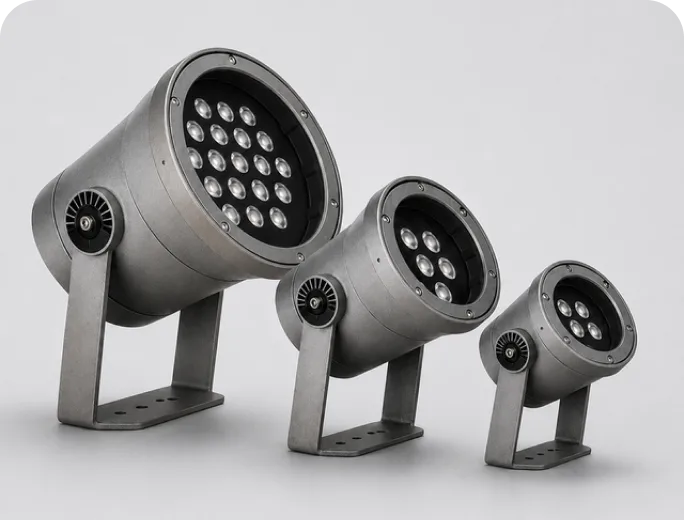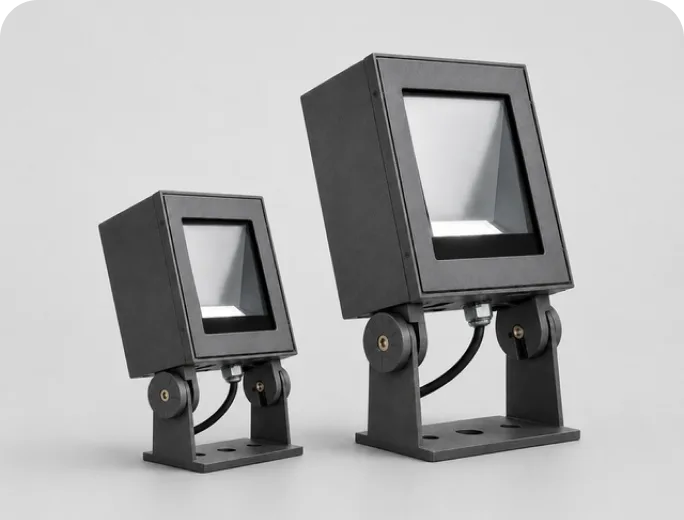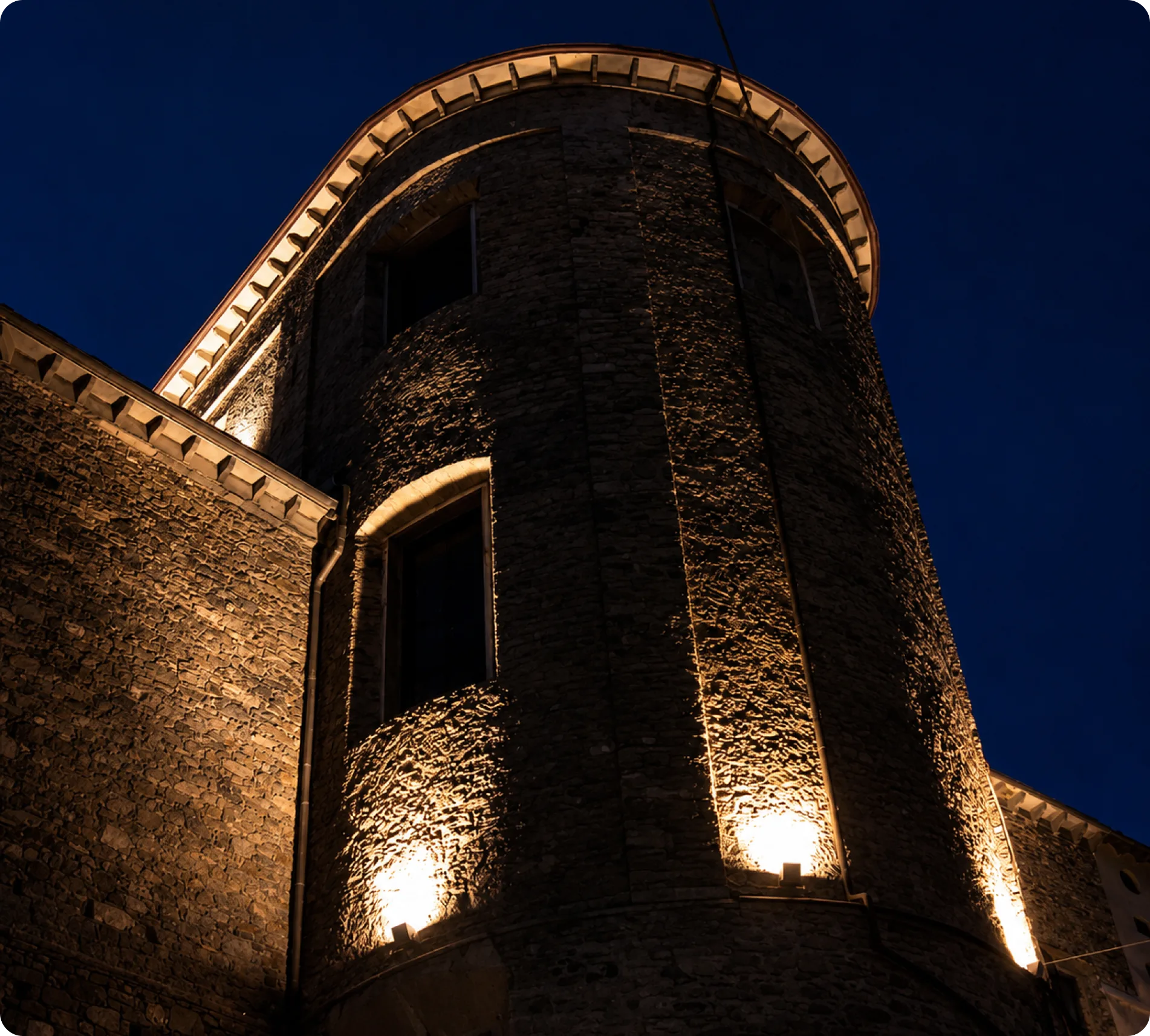
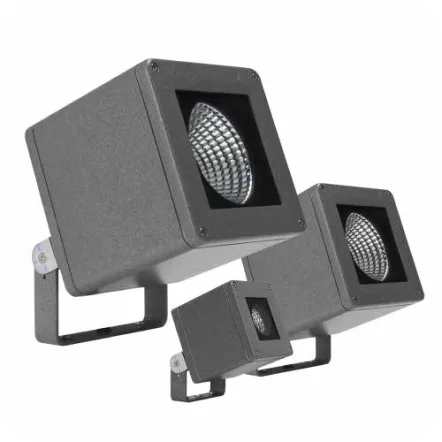
Our spotlights are engineered for precision at any scale,
from a single uplit tree to a full building façade, with the
adjustability, output, and materials to perform outdoors
for decades. The result — precision light, specified to the inch.
Why this collection?

Italian design

American / production design

Die-cast aluminum

316 stainless steel
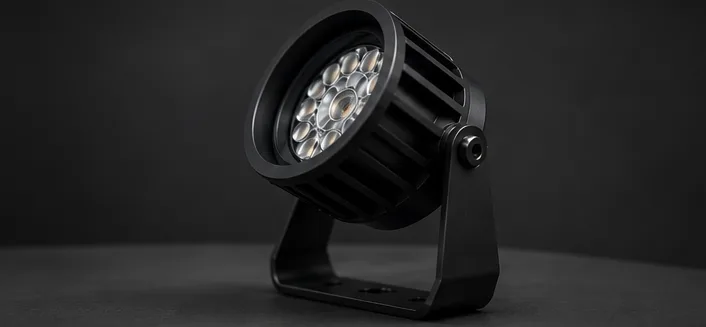


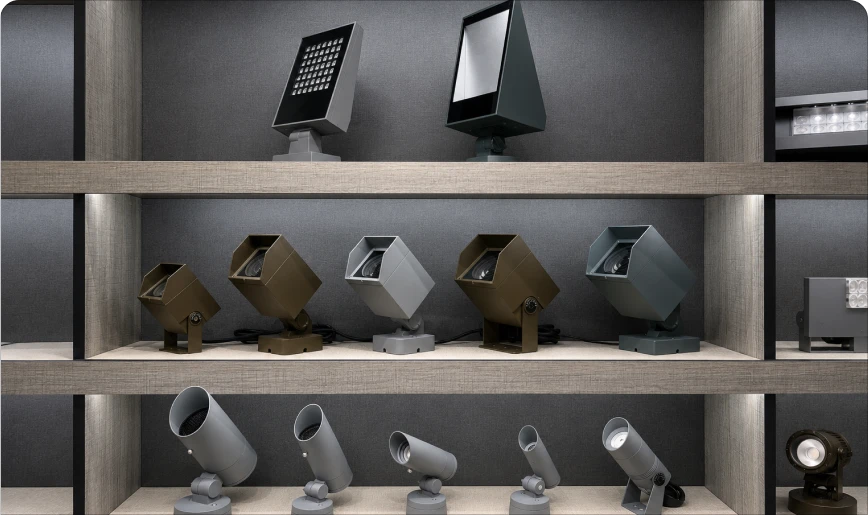
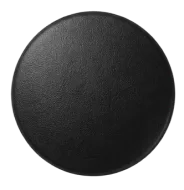
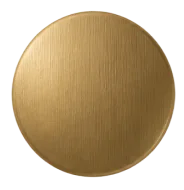
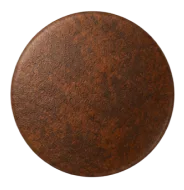
Both materials are available across the full color and finish range — Black, Brass, Corten, Grey,
and White — so material choice does not limit design flexibility.
Die-casting, step by step
Every aluminum housing in this collection begins as raw metal, not a finished shape.
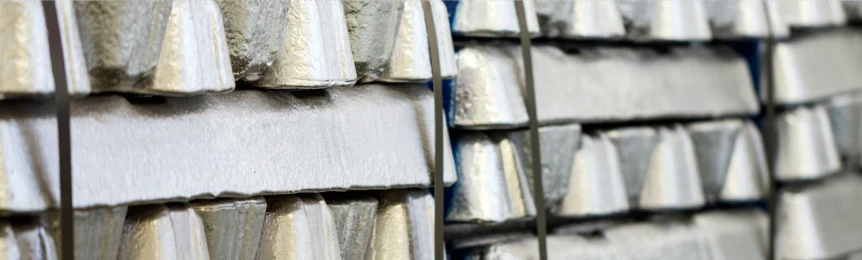
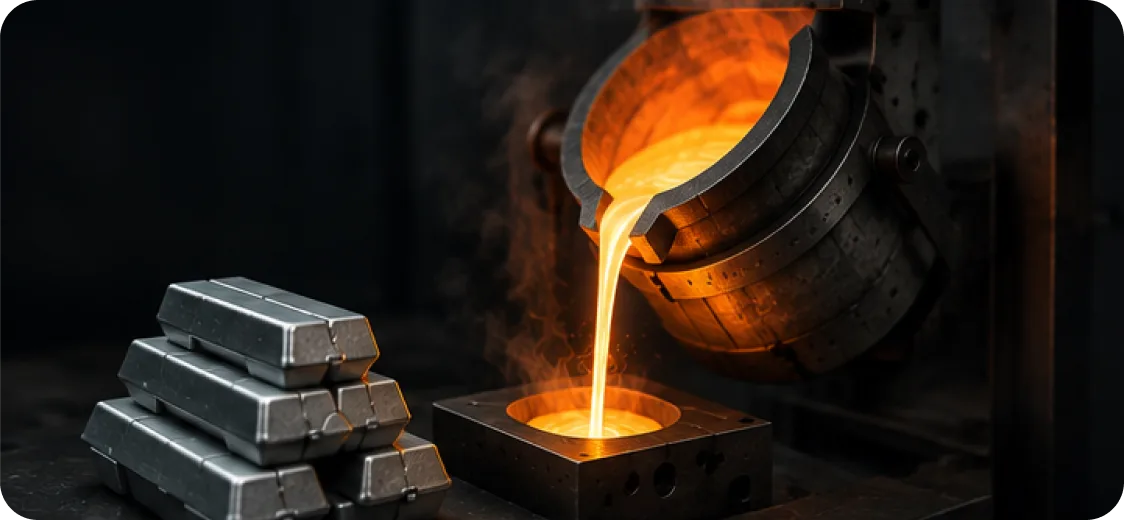
Aluminum ingots, typically a 12# / ADC12-grade casting alloy chosen for corrosion resistance and its ability to fill thin-walled forms, are melted in a furnace.
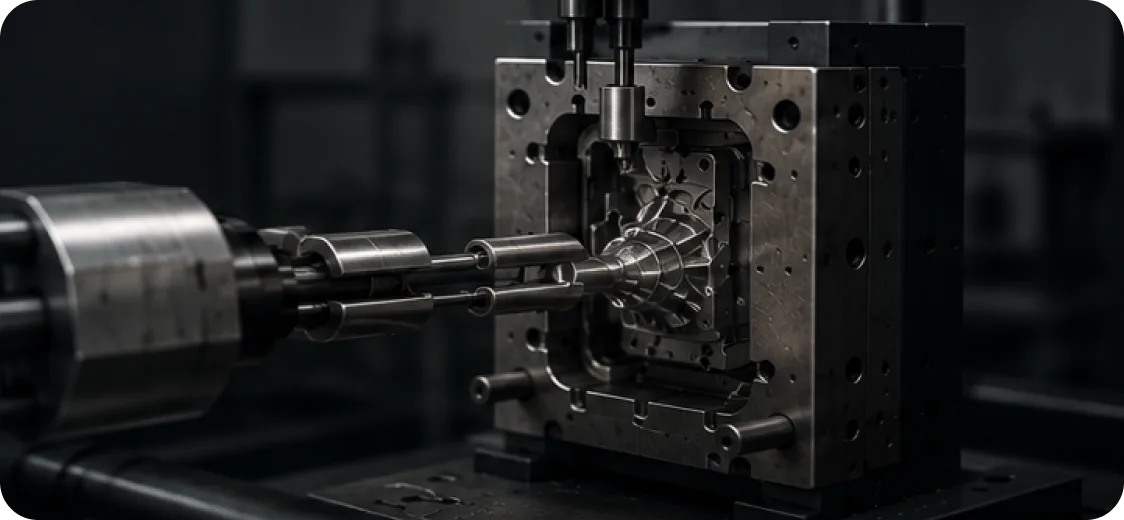
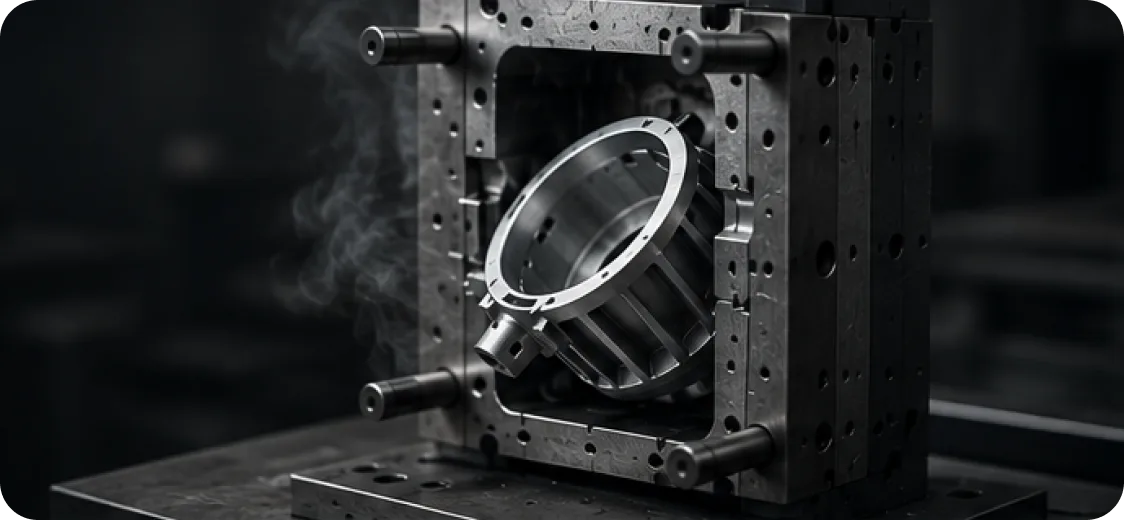
The molten aluminum is injected under high pressure into a hardened steel mold.

The casting solidifies within seconds under continued pressure, producing the density and structural strength that distinguish die casting from sand casting.

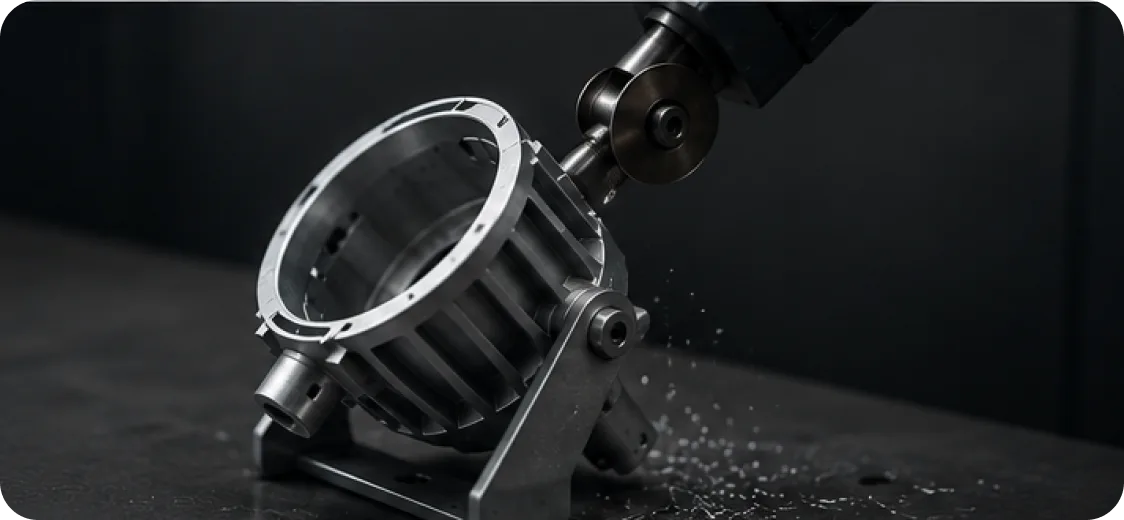
Excess metal, or flash, left along the mold seams is removed.
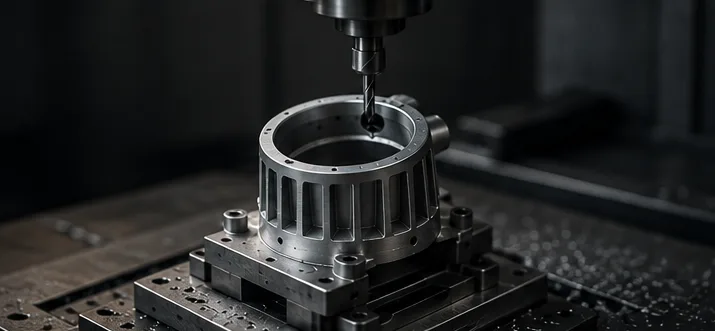
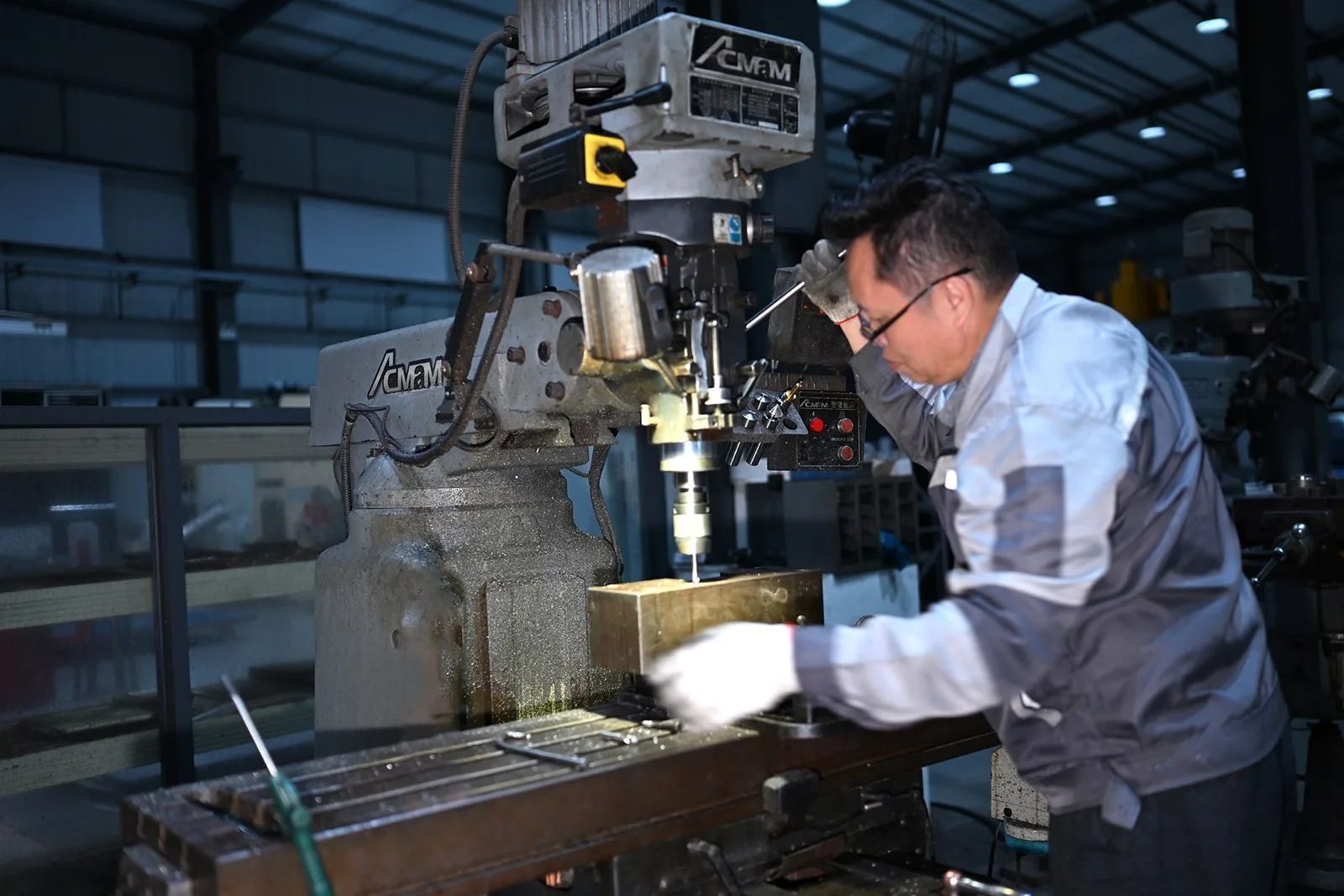
Mounting points, threads, and optic seats are CNC-machined to the tolerances the optical system requires.
Housings are sanded, sealed, and finished in the specified color.
Custom-molded forms give outdoor lighting greater flexibility in shape, scale, and integration while maintaining the performance required for exterior environments.
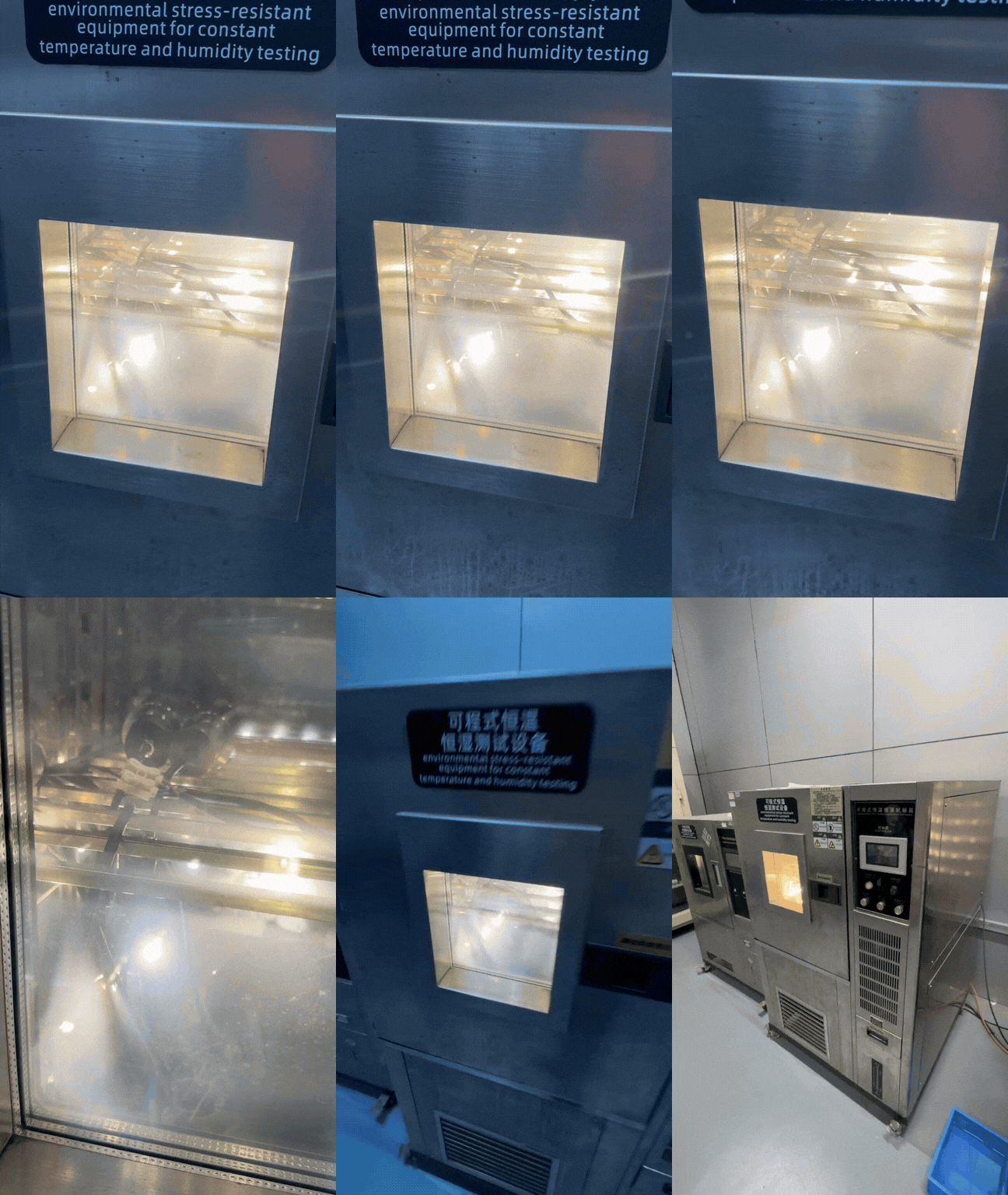
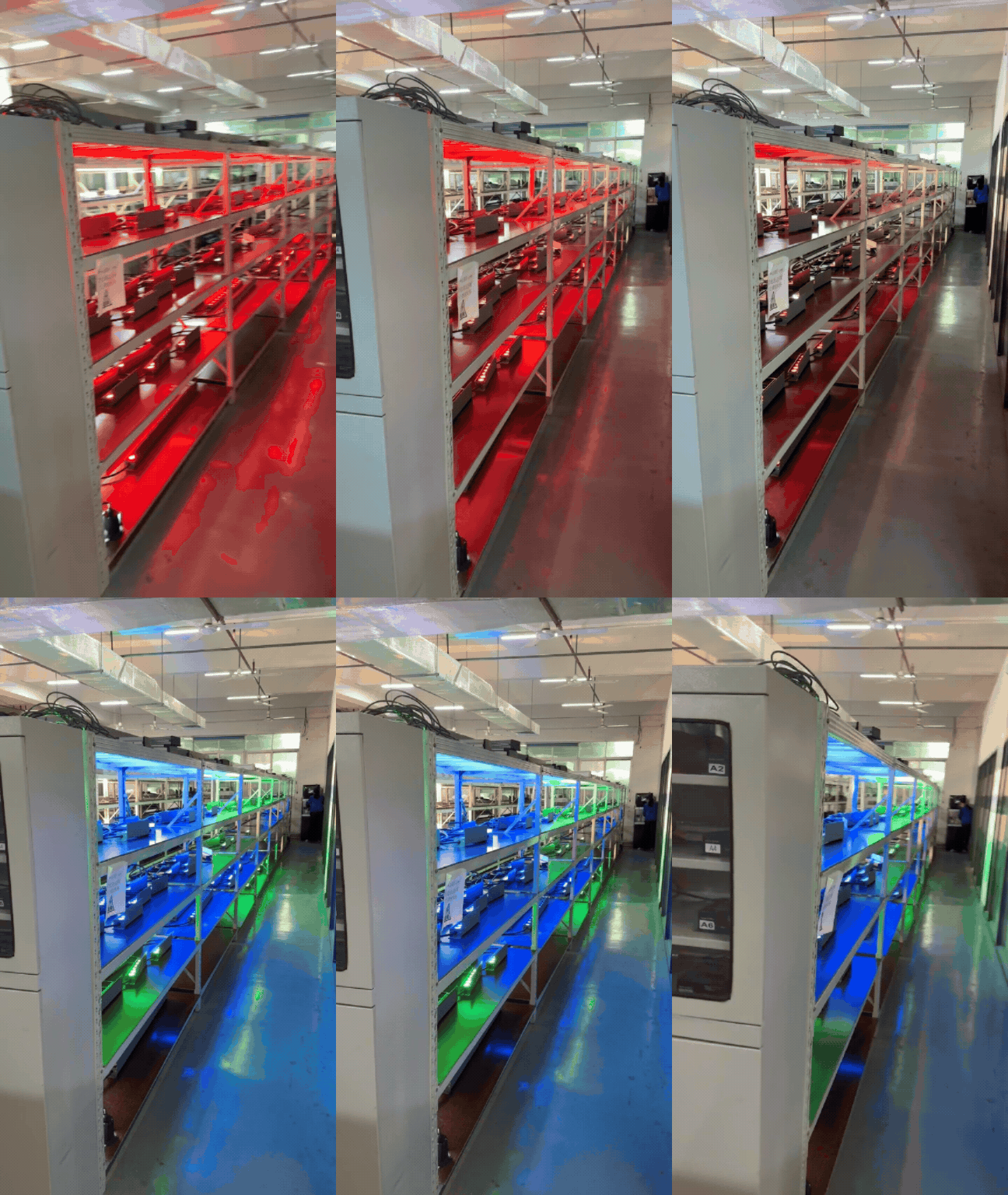
Every fixture is tested before it leaves the facility — not sampled, not spot-checked.
Raw materials and components are checked before production.
Fixtures are checked at each production stage.
Every finished unit is inspected before it ships.
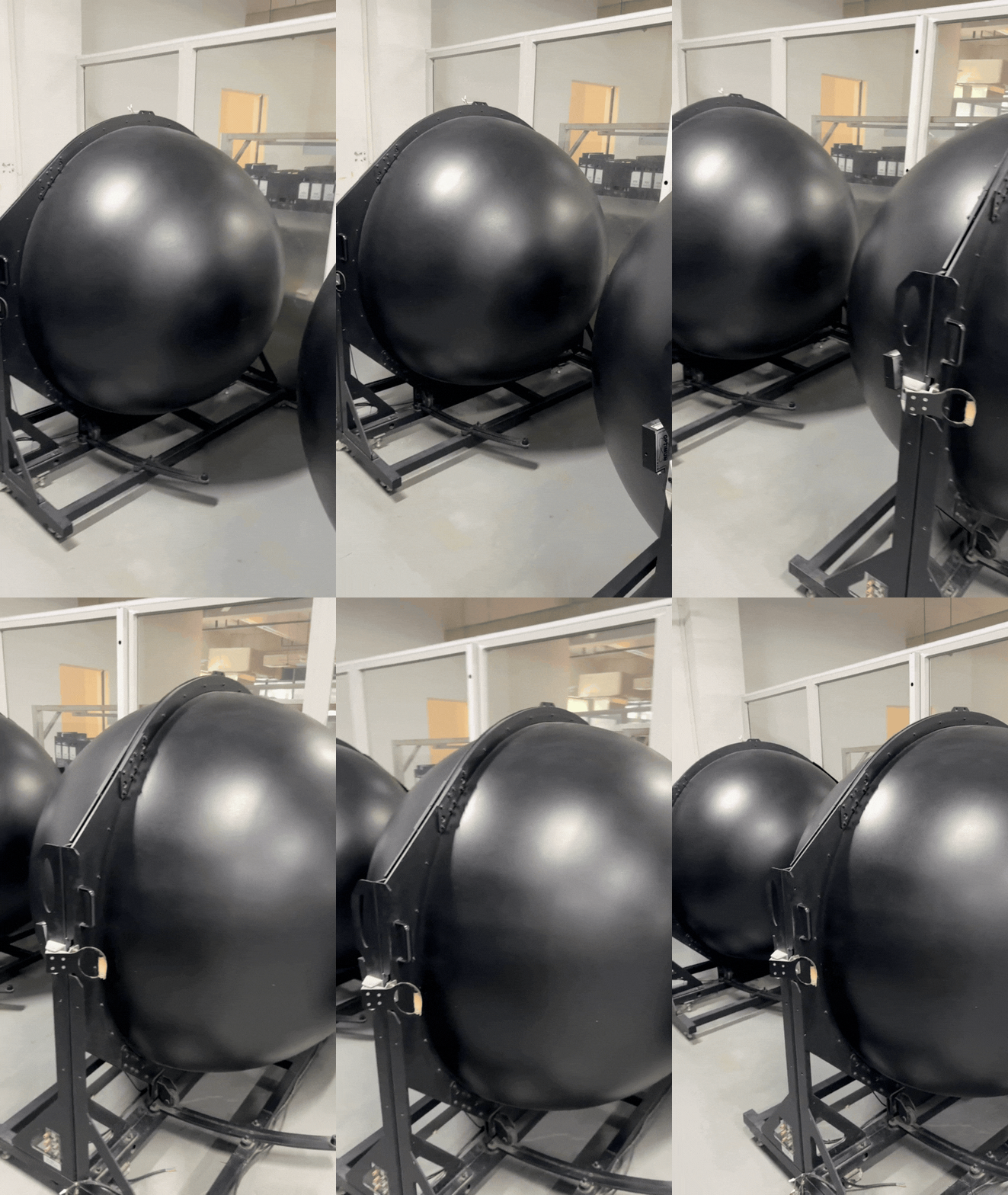
In-house lab testing
Confirms dust and water sealing meets its published rating
Confirms housings and seals hold under rapid temperature swings
Simulates long-term outdoor exposure in temperature and humidity chambers
Confirms beam angle and output match specification
Verifies component strength and finish durability
Confirms wiring and insulation meet safety requirements
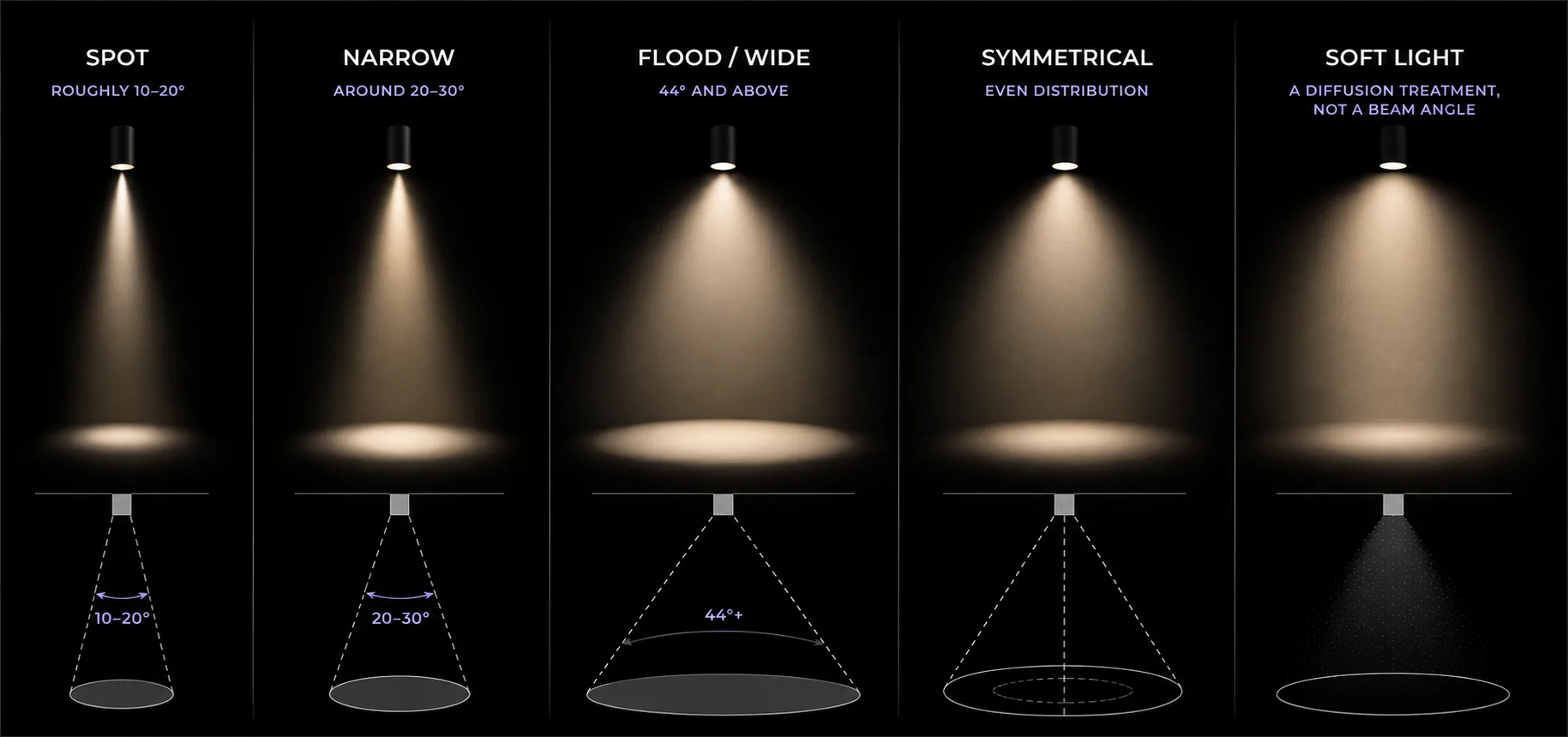
Distance and subject size determine beam angle.
Narrow beams (10–20°) suit tall, narrow subjects — columns, single trees, statues — or long throw distances
Wide beams (44°+) suit broad, flat subjects — walls, ground planes, hedges — or short throw distances
A single housing accepts multiple optics, allowing different lenses to be specified per location while keeping the fixture consistent across a project, even as the beam requirement changes
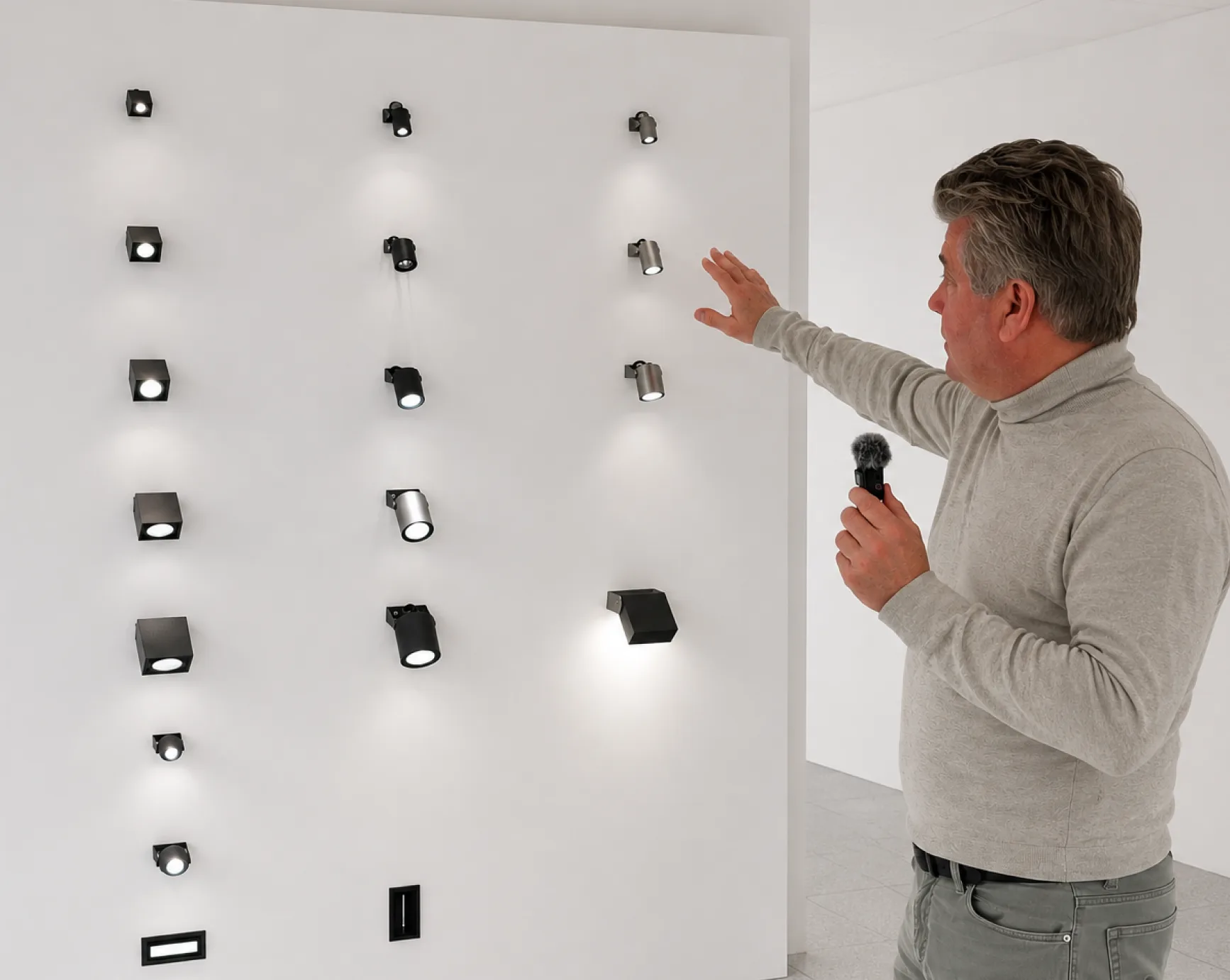
Every fixture in this collection rotates and tilts on-site after mounting. This matters for several reasons:
Every fixture in this collection uses an LED light source; no legacy lamp types are specified. This delivers several practical advantages:
No relamping — the light source is rated for the fixture’s full service life
Lower heat output, reducing risk to nearby foliage and building material
Instant-on operation at full brightness, with no warm-up period
Availability across standard color temperature ranges, allowing a project to hold one consistent white point from spotlights through the rest of its site lighting
Wattage is specified per fixture and per optic. The same housing is available across a range of wattages, allowing output to be matched to distance and subject without changing the fixture family.
Exact lumen output is optic- and CCT-dependent, and is published per SKU on each spec sheet — output varies by beam angle and driver.
Typical tiers across the collection
16–33W+A full power range within a single housing family, from garden-scale to high-power housings.
The collection is designed to integrate with a site’s existing control system rather than requiring a new one.
Standard phase-cut dimming for residential and light commercial installations.
Smooth, flicker-free dimming suited to commercial-scale projects.
Addressable and individually controllable, the standard for large or zoned commercial sites.
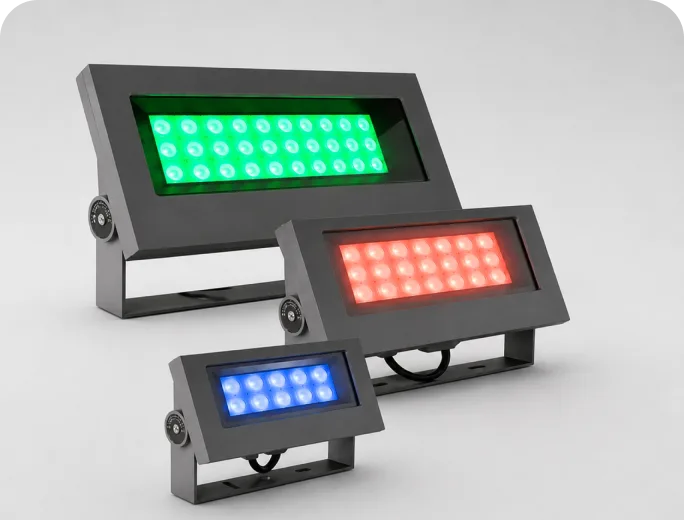
Full color and intensity control for show, seasonal, or branded lighting scenes.
For garden and bed installations.
Non-invasive mounting that will not girdle the trunk as it grows.
For façade and structural mounting.
Controlling spill and glare without reducing output.
Allowing beam angle or color to be adjusted without replacing the fixture body.
What sets us apart
Running the full process in-house — tooling, casting, machining, electronics, and finishing — rather than distributing it across outside subcontractors delivers three concrete advantages:
01
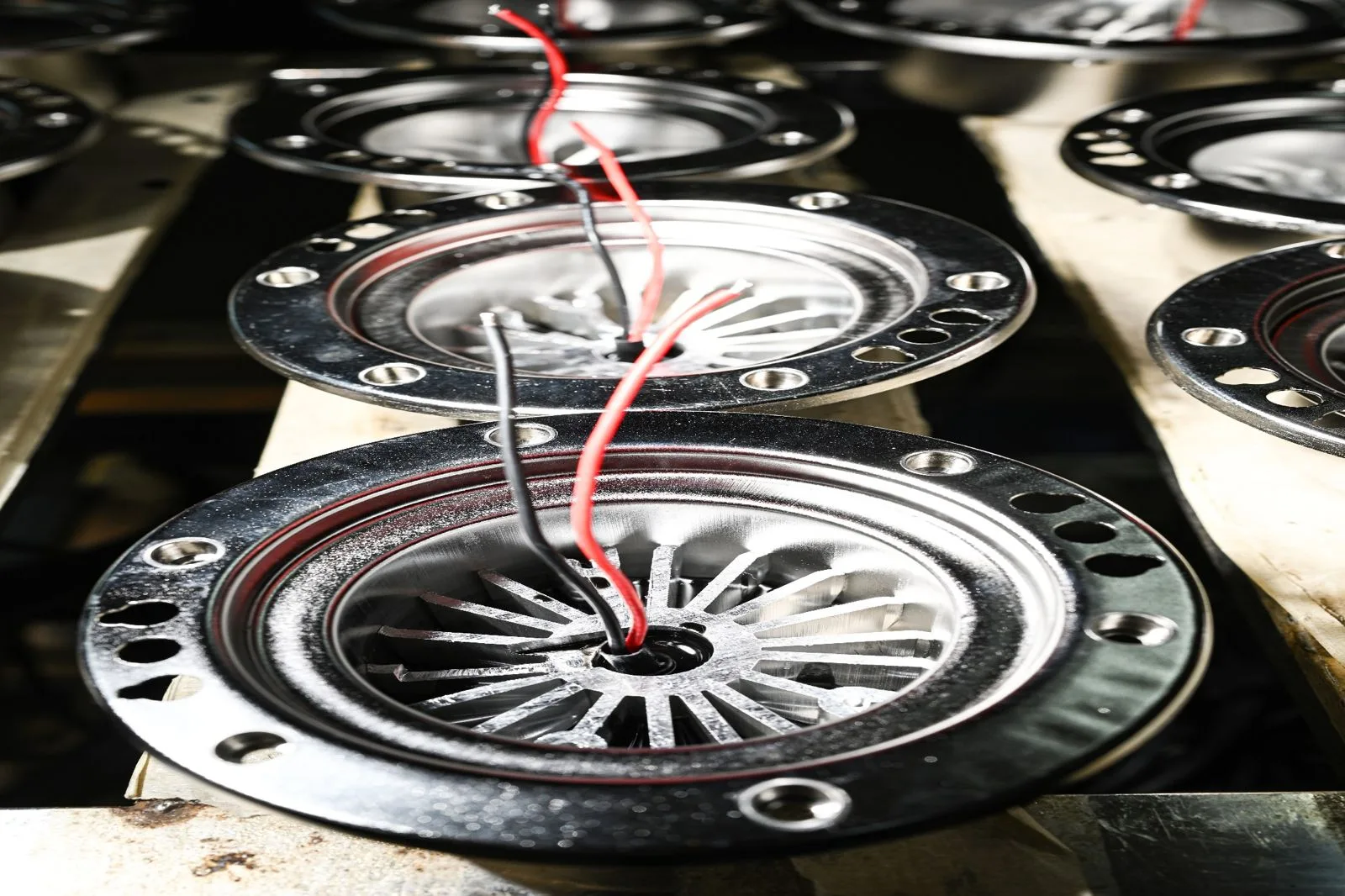
Machined flange, reamed bolt holes and a seated gasket — tolerance and finish quality visible in a single frame.
02
Cutting our own tooling in-house means no waiting on an outside toolmaker between order and first unit.
03
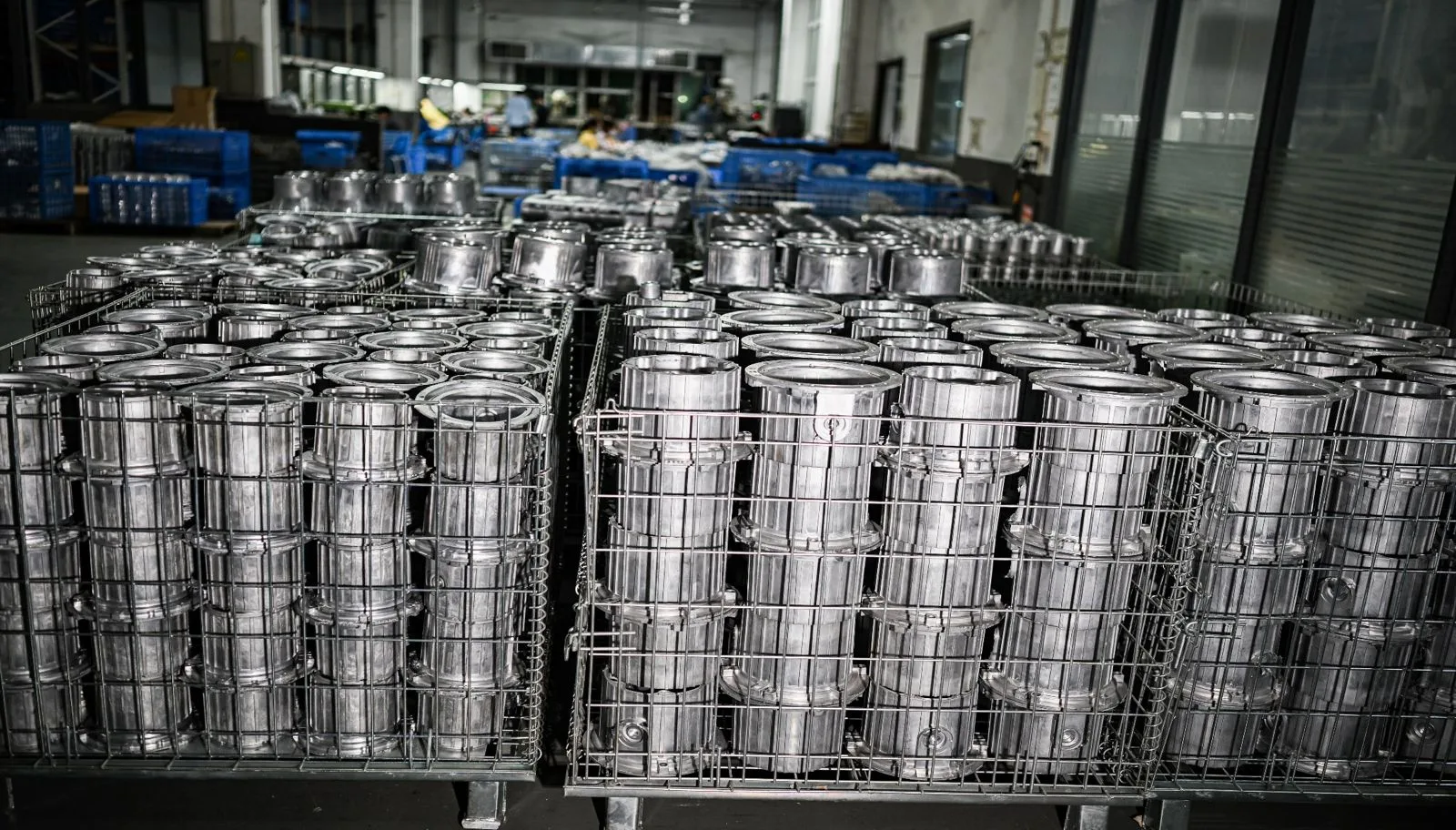
Hundreds of housings from one mold — dimensional repeatability is what holds a spec to the five-hundredth unit.
Choose your product and specify it your way.
Our team is here to help at every stage.