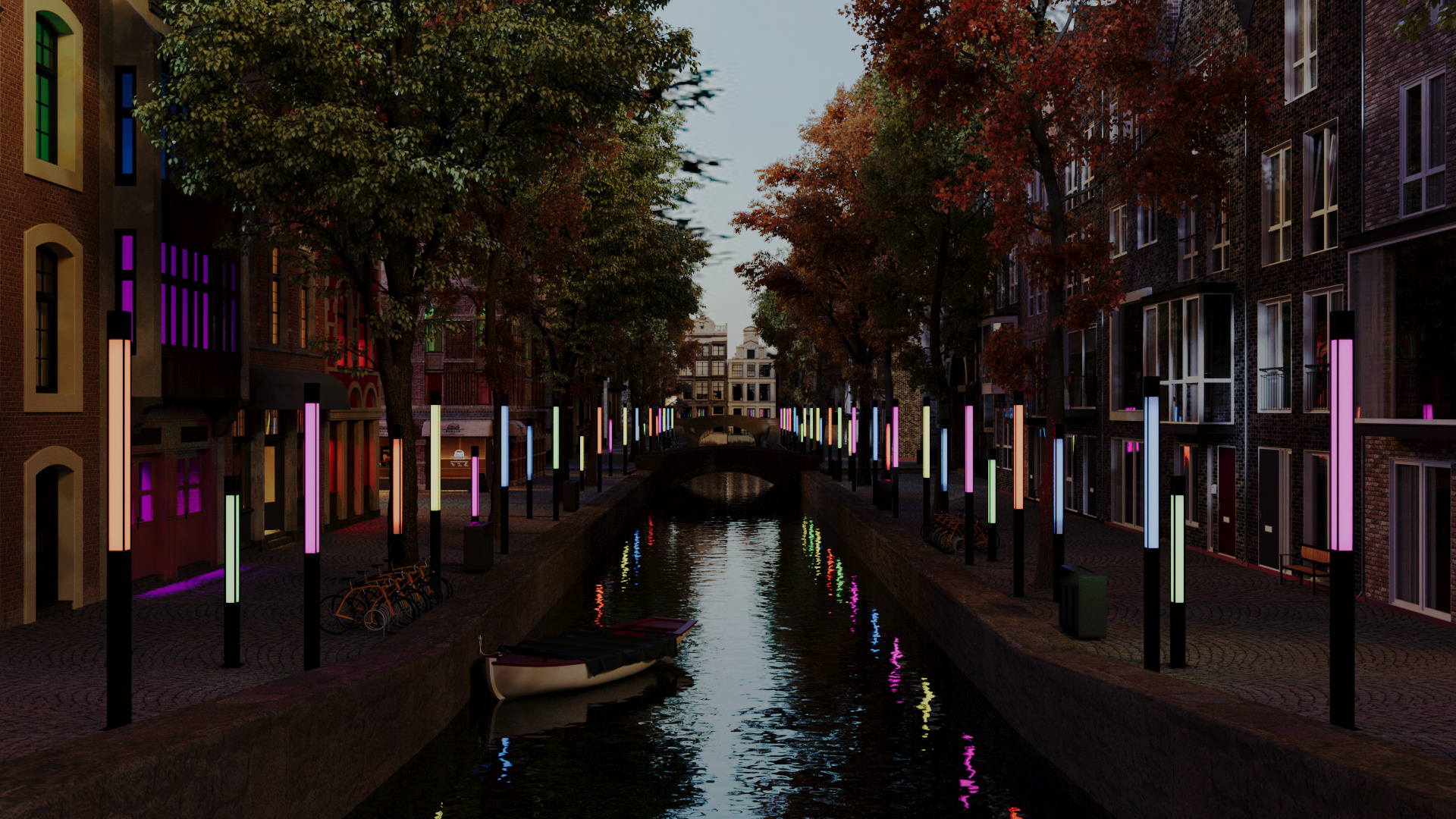
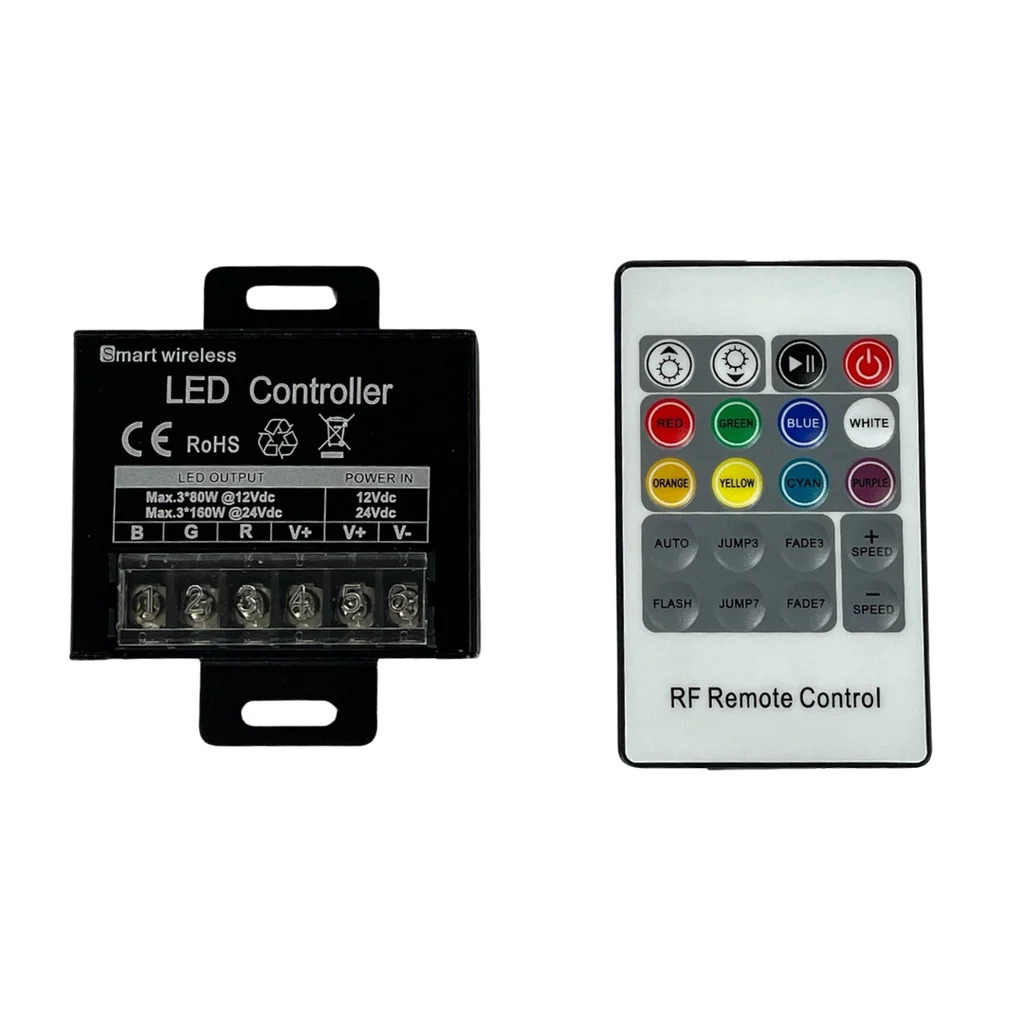

Color in lighting has long been the territory of entertainment venues, retail, and hospitality — spaces where atmosphere is part of the product and the budget supports the technology to create it. That's changing. Wireless RGB controls integrated directly into bollards and luminaires are making dynamic, tunable light accessible in a much wider range of applications, and the design implications are worth understanding.
This isn't about making things glow in unusual colors for effect. It's about using light as a responsive, programmable layer of a space — one that can shift with time of day, season, event, or function without touching a fixture or running new wire.
RGB — red, green, blue — refers to the combination of LED channels that allows a fixture to produce a full spectrum of color, including white at varying color temperatures. When that control is wireless, it means the fixture can be programmed, adjusted, and automated from a central system, a mobile device, or a building management platform without a dedicated control wire to each unit.
Integration matters because it removes the compromise that used to define color-tunable lighting. Previously, adding RGB capability to a bollard or exterior luminaire meant either a complex wired infrastructure or a standalone unit that couldn't be coordinated across a site. Wireless integration means the entire lighting environment — bollards, wall fixtures, pole-mounted luminaires — can be addressed as one system, updated in real time, and adjusted without physical access to each fixture.
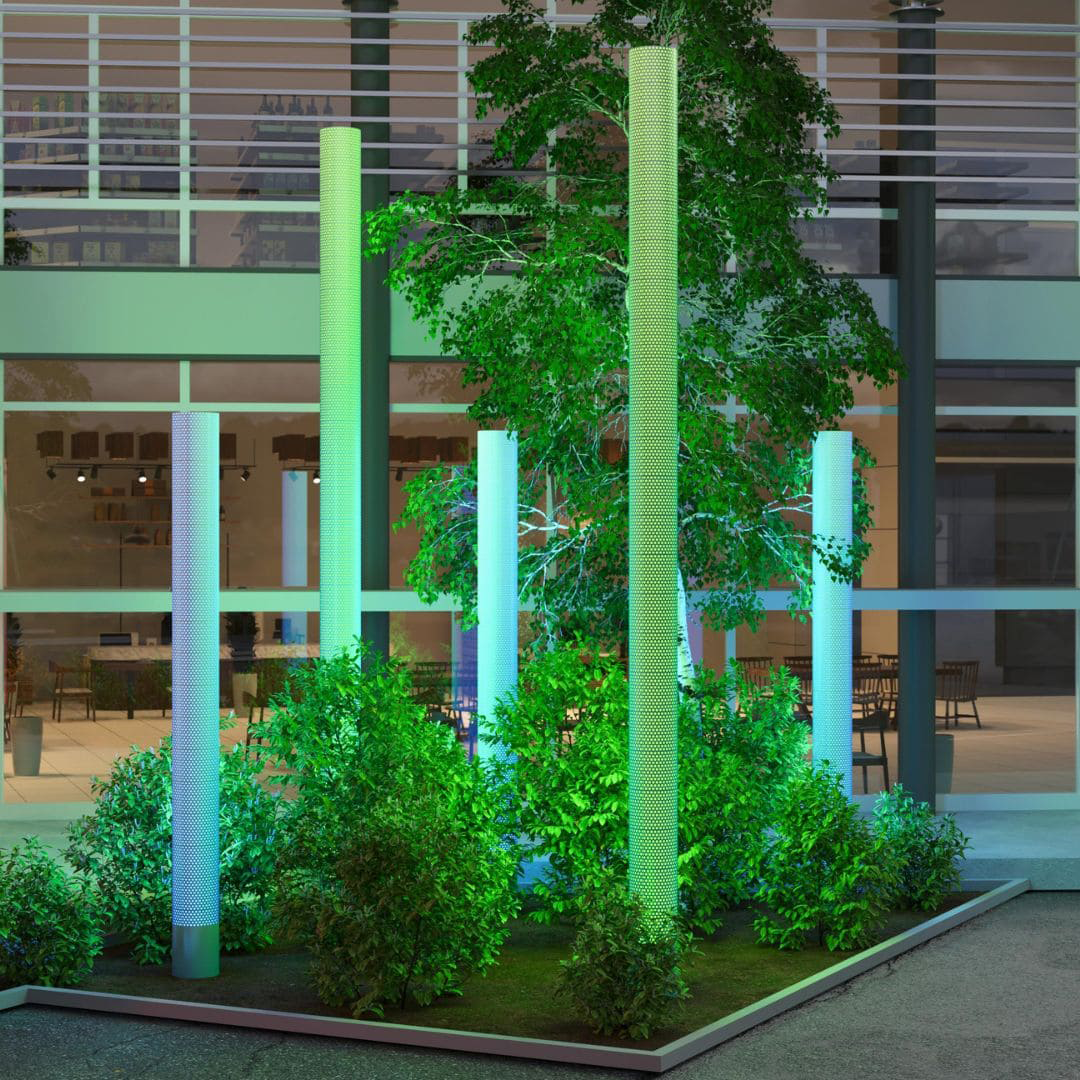
For architects and lighting designers, this opens up conversations that weren't practical before.
A civic plaza that runs white functional lighting on weeknights can shift to warm amber during a Friday evening market, or to a municipality's colors for a public event, without any change to the installed hardware. A hotel entrance that transitions from cool daylight-balanced white in the afternoon to a warm 2700K tone at dusk — automatically, on a programmed schedule — without manual adjustment.
Campuses, mixed-use developments, and cultural institutions are particularly well-suited to this kind of application. The lighting infrastructure is permanent. The programming is flexible. The space can respond to what's happening in it rather than being locked into a single visual register.
A few things worth understanding before it reaches the specification: